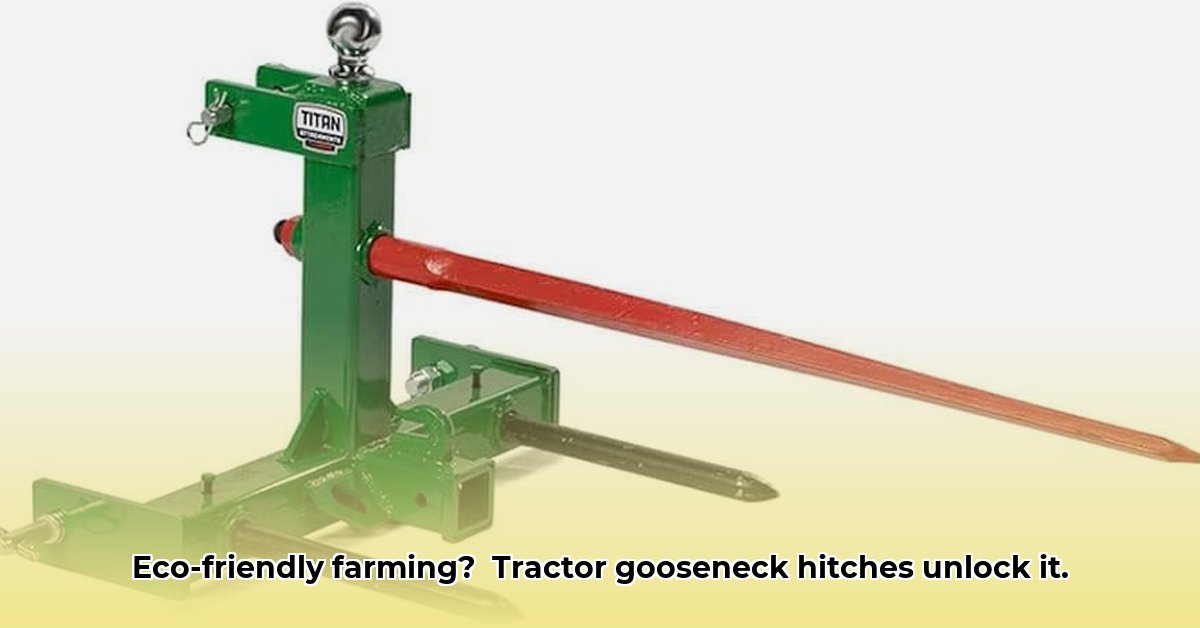
Tractor Gooseneck Hitches: Driving Towards a Greener Future in Farming
The hum of a tractor, the rumble of a truck – these sounds are the soundtrack of agriculture. But what if we could orchestrate a quieter, greener symphony? The way we transport farm goods significantly impacts fuel costs, equipment wear, and environmental sustainability. While a detailed guide on hooking up a gooseneck hitch is beyond this article’s scope, we explore how a simple switch can revolutionize sustainable farming. For more on tractor implements, check out this helpful resource: tractor loaders. We’ll show how this seemingly small change can save money, reduce pollution, and foster a more environmentally responsible agricultural future.
The Gooseneck Hitch: More Than Just a Fancy Hitch
Forget standard hitches; a gooseneck hitch is a game-changer. Designed for heavier loads, it enables farmers to transport significantly more produce—grains, hay, livestock—in a single journey. Imagine moving several tons of hay in one trip instead of multiple fuel-intensive runs. This is the essence of gooseneck hitch efficiency.
Weighing the Pros and Cons: A Balanced Perspective
While the advantages are considerable, a balanced view is necessary.
| Feature | Pros | Cons |
|---|---|---|
| Payload Capacity | Increased hauling capacity, reducing trips and saving fuel. | Requires a heavy-duty tractor capable of towing significant weight. |
| Fuel Efficiency | Significantly lower fuel consumption per unit transported, resulting in reduced operating costs. | Higher initial purchase price than conventional hitches. |
| Environmental Impact | Reduced greenhouse gas emissions from fewer trips and lower fuel usage. | The manufacturing and disposal of the hitch have an environmental impact (though significantly less than the fuel saved). |
| Maneuverability | Potentially less maneuverable than conventional hitches in tight spaces. | May require more space for turning and parking. |
Real-World Examples: Success Stories from the Field
Consider a dairy farmer transporting hundreds of gallons of milk daily. A gooseneck hitch could save thousands annually in fuel alone. Imagine the impact on large-scale grain operations – fewer trucks on the road mean reduced road wear and less congestion. This isn't merely about cost savings; it's about building a more efficient and sustainable farm.
Case Study: The Johnson Family Farm
The Johnson Family Farm in Iowa, after switching to gooseneck hitches, reduced their trips to the grain elevator from 15 to 5 per harvest season. This resulted in considerable fuel savings, reduced equipment wear, and freed up time for other farm tasks. Their experience exemplifies the transformative potential of this simple change.
Beyond the Hitch: A Holistic Approach to Sustainable Practices
The gooseneck hitch is one component of a broader, sustainable agricultural strategy. This includes:
- Smart Routing: Utilizing GPS and route planning software for fuel-efficient routes.
- Alternative Fuels: Exploring biodiesel or renewable fuels to decrease fossil fuel dependence.
- Technological Advancements: Investing in fuel-efficient tractors and trailers.
The gooseneck hitch is a powerful tool, but it's part of a larger solution.
How to Reduce Fuel Costs Using Gooseneck Hitches in Sustainable Farming
Key Takeaways:
- Gooseneck hitches improve fuel efficiency compared to conventional hitches.
- Reduced fuel consumption lowers operating costs and the carbon footprint.
- Proper hitch selection and usage are crucial for maximizing fuel savings and safety.
- Investing in gooseneck hitches contributes to a more sustainable agricultural operation.
- The initial investment is recouped through fuel savings over time.
The Hidden Fuel Savings of Gooseneck Hitches
High fuel costs are a major concern for farmers. Every gallon saved matters. Have you considered your towing setup's impact on fuel efficiency? Gooseneck hitches offer surprising benefits.
Aerodynamics and Fuel Efficiency: The Gooseneck Advantage
Gooseneck hitches improve aerodynamics. A standard hitch creates drag; a gooseneck is more streamlined, reducing air resistance and fuel consumption. These small gains accumulate across significant distances and multiple loads.
Reduced Strain, Improved Fuel Economy
Gooseneck hitches distribute weight evenly, reducing engine strain, and fuel consumption. This also extends the lifespan of your equipment, minimizing replacement costs—another return on investment.
Practical Considerations and Best Practices
Successful implementation requires careful planning. Choosing the right hitch and proper trailer attachment are paramount to safety and efficiency. Regular inspections and adherence to weight limits are essential.
Case Study: The Miller Family Farm
The Miller family farm in Iowa reported a 15% average fuel reduction for grain transport after adopting gooseneck hitches. This illustrates the significant financial benefits of this simple change.
Integrating Gooseneck Hitches into Sustainable Farming Practices
Switching to gooseneck hitches isn't just about saving money; it's about environmental responsibility. Reduced fuel consumption directly translates to lower greenhouse gas emissions, benefiting both the environment and your farm's image.
Planning for the Future: A Sustainable Investment
While the initial investment may seem significant, cumulative fuel savings will rapidly offset the cost. This is a long-term investment that balances sustainability and profitability.